
 Save
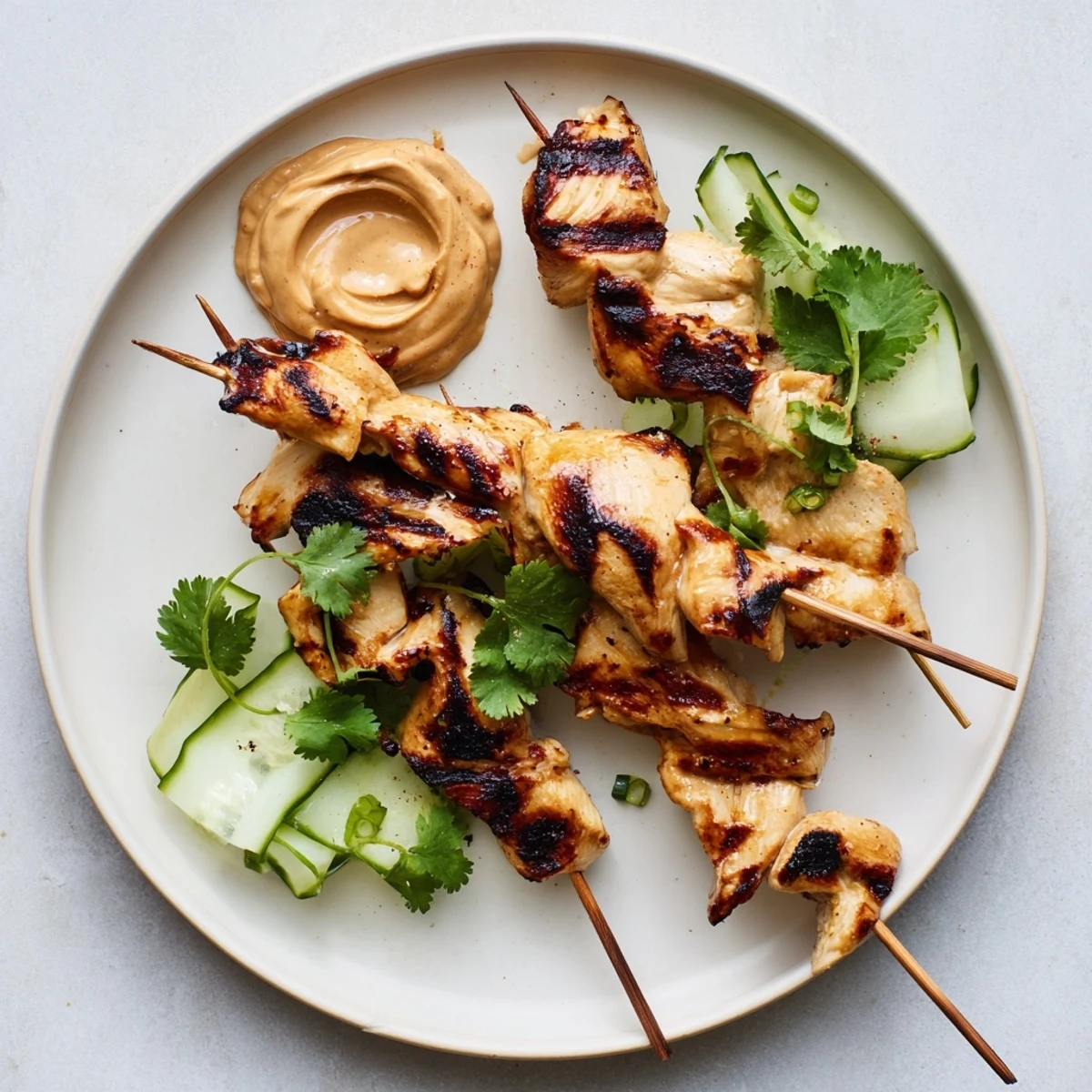
Save This dish features tender chicken strips marinated in aromatic spices like coriander, cumin, and turmeric, then grilled to perfection on skewers. Accompanied by a creamy peanut sauce blending coconut milk, peanut butter, and zesty lime, it offers a balance of bold and smooth flavors. Garnished with fresh cucumber, cilantro, and lime wedges, this Southeast Asian-inspired meal suits both appetizers and main courses alike.
I first tasted chicken satay on a humid Bangkok evening, sitting at a street vendor's cart with my hands sticky from coconut oil and the air thick with the aroma of charred chicken and roasting peanuts. The vendor, a weathered woman with kind eyes, showed me how the chicken had to be cut thin so it would absorb every spice in the marinade, and her peanut sauce—silky, complex, with just the right heat—changed how I thought about Southeast Asian cooking forever. Now whenever I make it at home, I'm transported back to that moment, and I always invite friends over because this dish deserves to be shared.
I made this for my sister's dinner party last spring, and I remember her boyfriend asking for the recipe before he'd even finished his first skewer. That's when I realized satay isn't just food—it's conversation starter, a moment where everyone pauses to appreciate something genuinely delicious, and a way to say you care without having to say much at all.
Ingredients
- Boneless, skinless chicken thighs or breasts: Thighs are more forgiving and stay juicier, but breasts work beautifully if you cut them thin—the key is slicing against the grain so each bite stays tender even when cooked through.
- Soy sauce: Your backbone for savory depth; it appears in both the marinade and sauce because it's that essential.
- Coconut milk: This creates richness and helps the spices cling to the chicken, plus it balances any heat from the chili paste.
- Brown sugar: Just enough sweetness to round out the flavors and aid in caramelization on the grill—don't skip it.
- Fish sauce: I know it smells funky in the bottle, but trust it; it adds umami depth that makes people say 'what is that amazing flavor?'
- Garlic and ginger: Fresh, please—minced fine so they distribute evenly and don't overpower.
- Ground coriander, cumin, and turmeric: These three together are the soul of the marinade; toast them slightly before using if you have time, and your kitchen will smell like a spice market.
- White pepper: Milder than black pepper and less spiky, it lets the other spices shine.
- Peanut butter: The creamy kind, not natural; the stabilizers actually help here.
- Lime juice: Brightens everything and cuts through the richness—fresh lime is worth hunting for.
- Chili paste: Optional but recommended; a teaspoon adds warmth without heat that overwhelms.
- Bamboo skewers: Soak them at least 30 minutes so they don't char before the chicken cooks through.
Instructions
- Build your marinade foundation:
- In a large bowl, whisk together soy sauce, coconut milk, brown sugar, fish sauce, vegetable oil, minced garlic, coriander, cumin, turmeric, white pepper, and salt. You'll notice the mixture is fragrant and slightly thick—this is exactly right. Take a moment to smell it; this is what your chicken is about to become.
- Marry chicken with spice:
- Add your thin chicken strips to the bowl and toss gently but thoroughly, making sure every piece gets coated in that mahogany-colored marinade. Cover and refrigerate for at least one hour—overnight is even better. As the chicken sits, the spices work their magic, becoming less like a coating and more like part of the meat itself.
- Create your peanut sauce while you wait:
- In a small saucepan, combine peanut butter, coconut milk, soy sauce, brown sugar, lime juice, fish sauce, chili paste if using, garlic, ginger, and water. Use a whisk to blend everything together, working out any lumps in the peanut butter—this takes patience but it's worth it.
- Coax the sauce to silky perfection:
- Set the heat to medium-low and whisk constantly for 5 to 7 minutes. You're looking for it to thicken slightly and become glossy. If it seems too thick, add water a tablespoon at a time. The sauce should coat a spoon lightly and flow smoothly. Once it's right, take it off the heat and let it cool to room temperature—it'll thicken a bit more as it cools, and that's perfect.
- Prepare your grill and skewers:
- Heat your grill or grill pan to medium-high until it's hot enough that a drop of water sizzles immediately. Thread your marinated chicken strips onto the soaked skewers, working gently so you don't squeeze out those flavorful juices. Leave a tiny bit of space between each piece so heat can circulate and cook them evenly.
- Achieve that perfect charred sear:
- Place skewers on the hot grill and resist the urge to move them for the first 2 to 3 minutes. You want the chicken to develop a caramelized crust with light char at the edges. Flip and cook the other side for another 2 to 3 minutes until the chicken is opaque throughout and has light char marks. You'll smell the exact moment it's ready.
- Plate and celebrate:
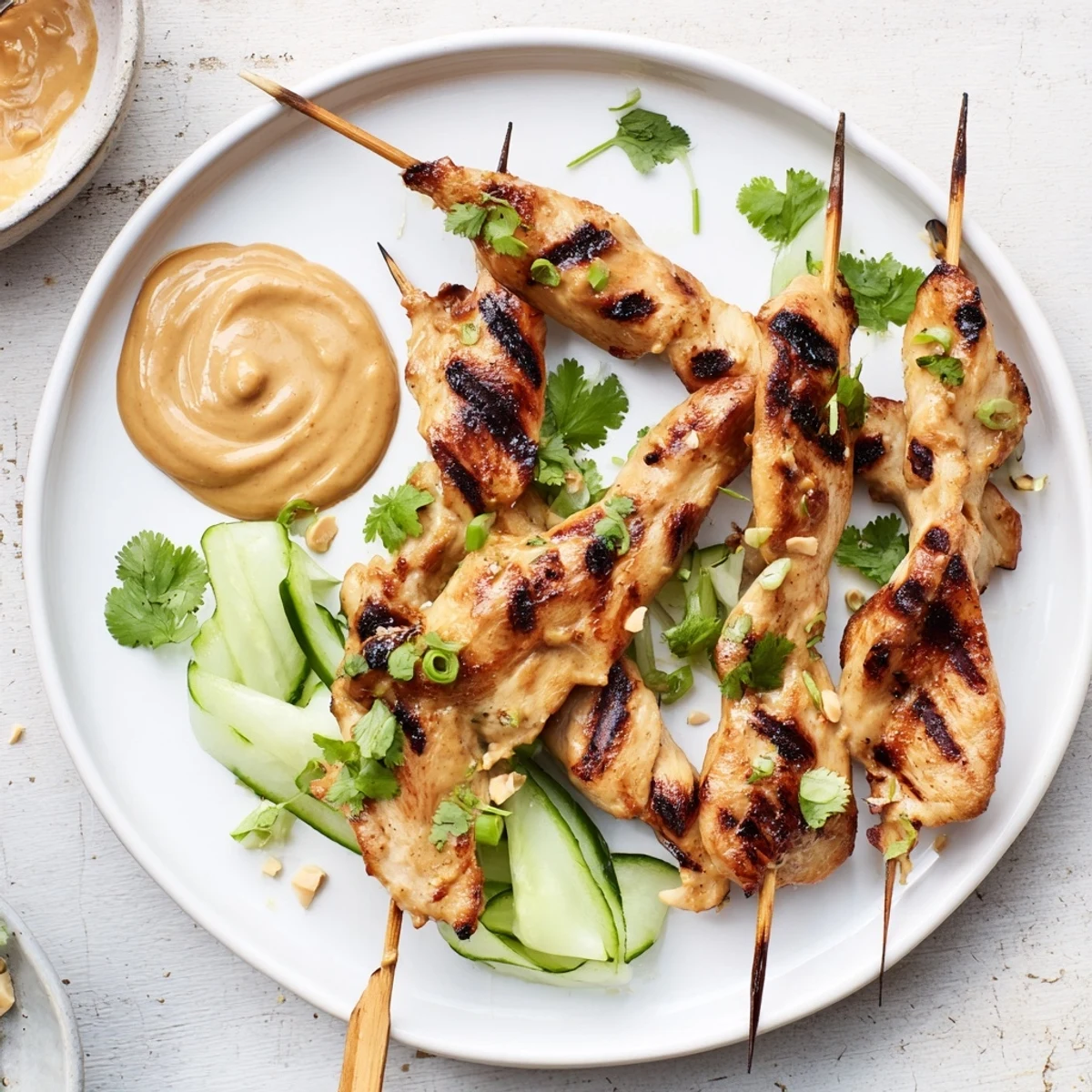
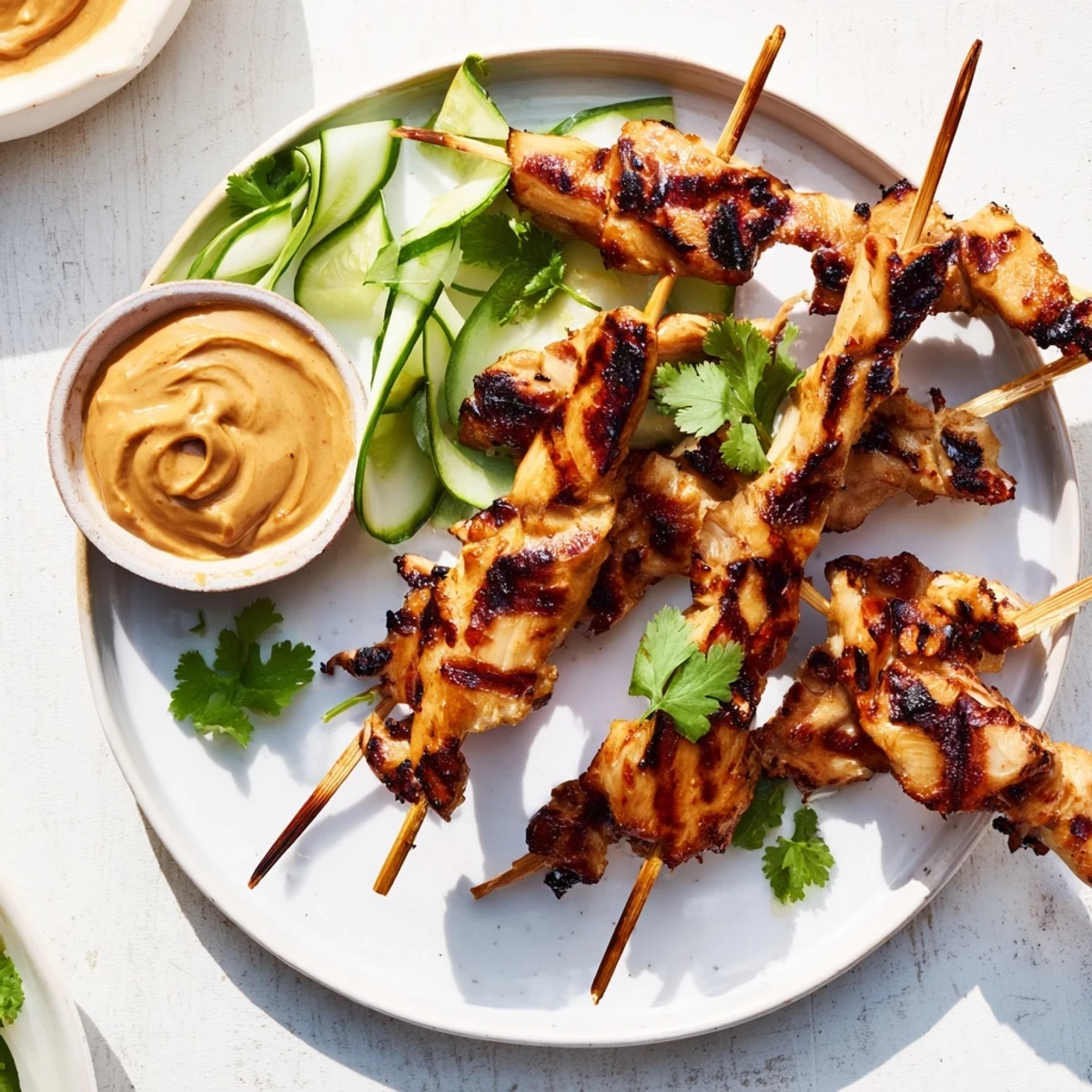
- Arrange your golden, slightly charred skewers on a platter and drizzle that creamy peanut sauce nearby. Scatter cucumber slices and fresh cilantro around them, tuck lime wedges between the skewers, and if you're serving with jasmine rice, nestle some on the side. Step back and look at what you've made.
 Save
Save I remember feeding this to my best friend on her last night before moving overseas, and we didn't talk much—we just sat on my small patio, eating satay with our fingers, sharing the peanut sauce, and letting the food say what words couldn't quite manage. That's when I understood that the best recipes are the ones that create quiet moments of connection.
The Magic of Thin Slicing
The reason this dish works so well is that thin chicken strips aren't just easier to eat—they're a shortcut to tenderness. Thick pieces would need longer cooking and longer marinating; thin strips absorb flavor in an hour and cook through in minutes over high heat, staying moist the entire time. It's a small technique that changes everything, and once you understand why, you'll start slicing everything thin.
Why This Sauce Works
The peanut sauce is a study in balance—creamy from peanut butter and coconut milk, salty and umami-rich from soy sauce and fish sauce, sweet from sugar, bright from lime, and warm from ginger and garlic. No single flavor dominates; instead they layer and support each other. This is why the sauce tastes like something you can't quite name but absolutely crave, and why it makes chicken taste like the best version of itself.
Serving Ideas and Variations
Satay is endlessly flexible—serve it as an appetizer with cocktails, as a main course with jasmine rice and a cucumber salad, or even as a game day snack straight from the skewer. Make a vegetarian version with firm tofu or tempeh, using soy sauce instead of fish sauce; the satay doesn't miss the chicken because the marinade and sauce are so flavorful. For a spicier crowd, add extra chili paste or serve sriracha on the side. For a cooler evening, you can even broil the skewers in the oven at high heat for 3 to 4 minutes per side, though the grill gives you that essential char.
- Batch the peanut sauce ahead and keep it refrigerated for up to four days—it actually gets better as flavors meld.
- If you don't have fish sauce, tamari or additional soy sauce works, though the depth won't be quite the same.
- Left over satay is excellent cold the next day, or quickly warmed in a dry skillet; the sauce reheats gently over low heat with a splash of water.
 Save
Save Make this satay whenever you want to feel capable in the kitchen and impress people you care about. It's simpler than it seems, and so much more satisfying than the outcome suggests.
Questions & Answers
- → What type of chicken works best for this dish?
-
Boneless, skinless chicken thighs or breasts thinly sliced ensure tenderness and quick grilling while absorbing the marinade flavors effectively.
- → Can the peanut sauce be adjusted for spice level?
-
Yes, adding chili paste in the sauce offers a gentle heat that can be tailored to your preference or omitted entirely for a milder taste.
- → How long should the chicken marinate for optimal flavor?
-
Marinate the chicken for at least one hour, or up to overnight, allowing the spices and coconut milk to deeply infuse the meat.
- → What are good accompaniments to serve alongside the skewers?
-
Fresh cucumber slices, cilantro leaves, lime wedges, and steamed jasmine rice complement the richness of the chicken and sauce nicely.
- → Is it possible to make a vegetarian variation of this dish?
-
Firm tofu or tempeh can replace chicken, while using soy sauce instead of fish sauce maintains savory depth for a plant-based option.