
 Save
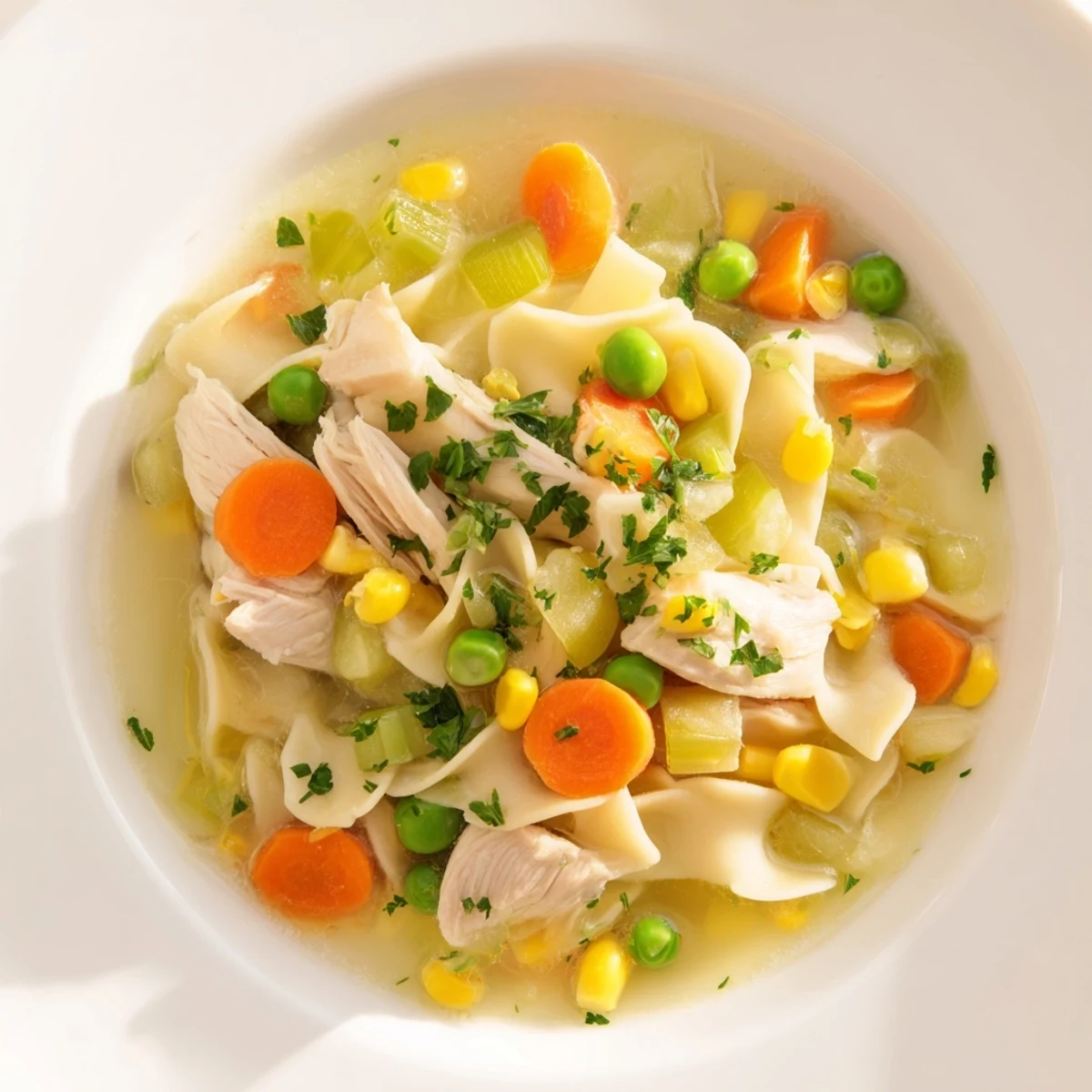
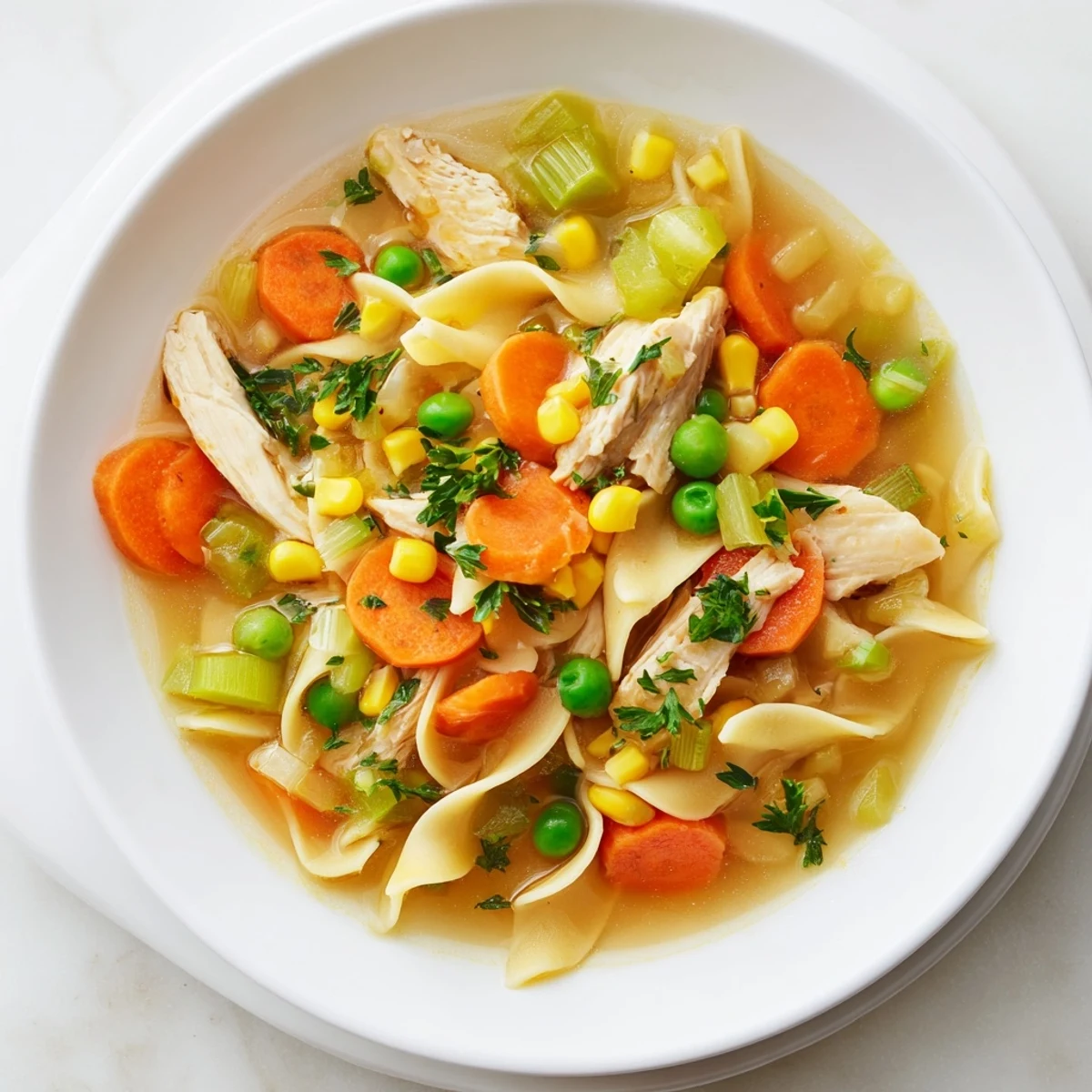
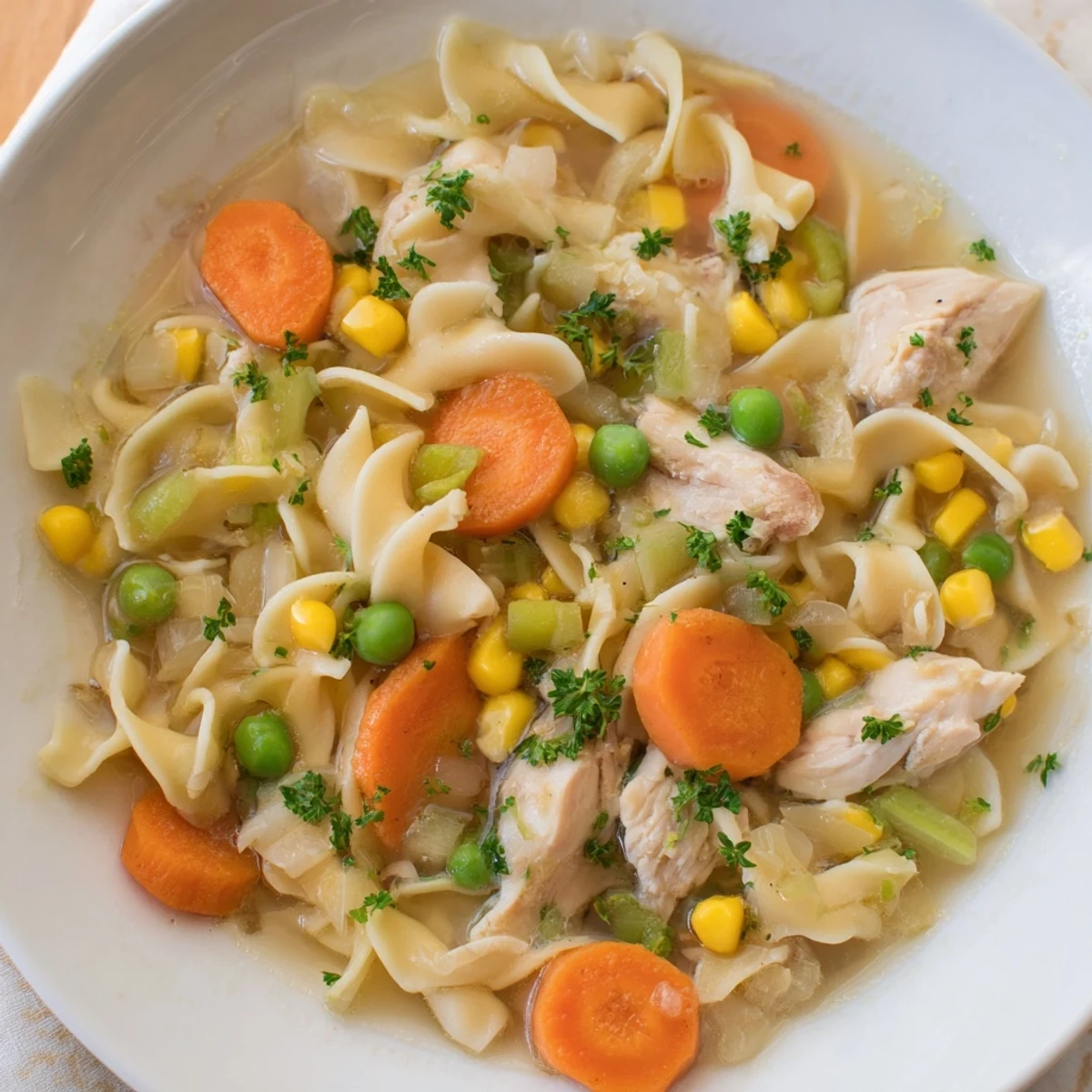
Save This warm and hearty preparation combines tender pieces of chicken with vibrant carrots, celery, and onion, simmered alongside peas and corn in a rich broth. Soft egg noodles add comforting texture, while seasonings like thyme and bay leaf bring depth of flavor. Easy to prepare and perfect for chilly days, it offers a balanced, wholesome meal full of natural goodness. Garnish with fresh parsley for a hint of brightness and enjoy with crusty bread or a fresh salad.
There's something about the smell of chicken simmering with carrots and celery that makes any day feel less overwhelming. I discovered this soup during one of those stretches where I needed something that was both comforting and actually nourishing, and somehow it became the recipe I reach for without thinking. The beauty of it is how forgiving it is—soft noodles, tender chicken, vegetables that cook just right—and how it tastes even better the second day. It's the kind of meal that wraps around you like a warm kitchen towel.
I made this for my neighbor last winter when she came down with a cold, and the way she smiled holding the warm bowl told me exactly why comfort food exists. She later told me it was the first thing she actually wanted to eat in days, which felt like the highest compliment a soup could receive.
Ingredients
- Boneless, skinless chicken breasts (2, about 400 g): Cut them into bite-sized pieces so they cook evenly and disappear into spoons without resistance.
- Carrots (2 medium): Peel and slice them—they add natural sweetness and that satisfying texture when you bite into them.
- Celery (2 stalks): This is your aromatic foundation; slice it thin so it softens completely into the broth.
- Onion (1 medium): Dice it small; it'll melt into the broth and you won't even realize it's there, just its sweetness.
- Garlic (2 cloves): Mince it fine so it distributes evenly and adds depth without any harsh edges.
- Frozen peas (1 cup, 150 g): They stay bright green and add a little pop of sweetness if you add them near the end.
- Corn kernels (1 cup, 150 g): Fresh or frozen works equally well; they add creaminess and comfort to each spoonful.
- Low-sodium chicken broth (6 cups, 1.5 liters): This is your canvas—choose a good one because the broth flavor matters more than you'd expect.
- Egg noodles (120 g, 4 oz): They should be tender but not mushy; cooking time varies by brand so keep an eye on them.
- Bay leaf (1): It quietly adds complexity and should be removed before serving so no one accidentally gets it.
- Dried thyme (1 tsp): A gentle herb that doesn't overpower; you can adjust up or down depending on your mood.
- Salt and freshly ground black pepper: Taste as you go—the chicken broth already has salt, so add gradually.
- Olive oil (2 tbsp): Use it to build your aromatic base; it keeps the vegetables from sticking and adds richness.
- Fresh parsley (2 tbsp, optional): Chop it just before serving to keep it bright; it's the finishing touch that makes people notice.
Instructions
- Build your aromatic base:
- Heat the olive oil in your large pot over medium heat, then add the onion, carrots, and celery all at once. Let them sauté for about 5 minutes, stirring occasionally, until they soften and smell amazing—you'll know it's working when the kitchen starts to smell like home. Watch for the edges of the vegetables to turn golden.
- Welcome the garlic:
- Add your minced garlic and stir constantly for just 1 minute. Garlic burns easily and tastes bitter if you're not careful, but at this moment it releases its flavor and makes everything smell even better. Don't walk away from the pot here.
- Introduce the chicken:
- Add your chicken pieces and cook for 4 to 5 minutes, stirring frequently, until the pieces turn opaque and no longer look raw on the outside. This step isn't about cooking the chicken all the way through—you're just sealing it so it doesn't release all its juice into the broth.
- Pour in the broth:
- Add your chicken broth along with the bay leaf, thyme, salt, and pepper. Bring everything to a boil—you'll see big bubbles breaking the surface, and the pot will smell like anticipation. Once it's boiling, reduce the heat to create a gentle simmer.
- Let it simmer quietly:
- Cover the pot and let it simmer gently for 15 minutes. This is when the vegetables continue to soften, the chicken finishes cooking through, and all those flavors start making friends with each other. You can step away, but your kitchen will smell incredible.
- Add noodles and vegetables:
- Add the egg noodles, peas, and corn, stirring to make sure the noodles don't stick together. Simmer uncovered for another 10 to 12 minutes—the exact time depends on your noodle brand, so start tasting around the 10-minute mark. The noodles should be tender but still have a little resistance when you bite them.
- Final adjustments:
- Fish out the bay leaf with a spoon (you'll feel silly if someone finds it in their bowl). Taste the broth and adjust salt and pepper as needed; sometimes the flavors need a tiny bit more to shine. If it tastes a little flat, that's often because it needs pepper more than salt.
- Serve with intention:
- Ladle the soup into bowls and scatter fresh parsley over the top if you have it. The warmth will bring out the parsley's fresh flavor, and it looks like you took a little extra care.
 Save
Save One afternoon I made this soup for my mother when she was stressed about something I can't even remember now, and halfway through her bowl she just went quiet. Sometimes food does more than fill your stomach—it tells someone that you're thinking about them, that you took time, that you cared enough to get it right.
Why This Soup Feels Deceptively Simple
The magic here isn't in fancy technique or hard-to-find ingredients—it's in honoring the classic formula that has worked for generations. The aromatic base of onion, carrot, and celery does most of the work, building flavor without any effort on your part. Once that's going, everything else just settles in and becomes better together, which is exactly how comfort food should work.
Making It Your Own
This recipe is a starting point, not a rulebook. I've made it with turkey instead of chicken, swapped the noodles for rice, added spinach at the last moment, or thrown in a splash of lemon juice when it needed brightness. The structure stays the same—sauté aromatics, add protein, build broth, finish with starch and vegetables—but you can play within those boundaries.
Serving and Storing
Serve this soup hot in deep bowls with crusty bread or alongside a simple green salad. It tastes best the same day, but it keeps beautifully in the refrigerator for up to four days and freezes well for up to three months—just note that noodles soften a bit more when reheated, so don't cook them quite as long if you're planning to freeze it.
- A squeeze of fresh lemon juice just before eating brightens everything without making the soup taste lemony.
- If you reheat and the soup seems thick, add a splash of broth or water to loosen it back to a simmer.
- Leftovers actually taste better as the flavors have more time to get to know each other.
 Save
Save This soup exists in the space between what your body needs and what your heart needs, which is exactly where the best recipes live. Make it and see what it becomes in your kitchen.
Questions & Answers
- → Can I use different noodles for this dish?
-
Yes, gluten-free or rice noodles can be used to accommodate dietary preferences without compromising taste.
- → How can I enrich the flavor of the broth?
-
Using bone-in, skin-on chicken thighs and removing skin and bones before serving adds a richer, deeper broth flavor.
- → Is it possible to make this dish dairy-free?
-
This preparation is naturally dairy-free when using suitable broth and noodles, making it suitable for those avoiding dairy.
- → How do I ensure the chicken remains tender?
-
Cook the chicken gently until just opaque before simmering in broth to maintain tenderness and avoid drying out.
- → Can I add a fresh touch before serving?
-
A squeeze of lemon juice or a sprinkle of fresh parsley brightens the flavors and adds freshness to the dish.