
 Save
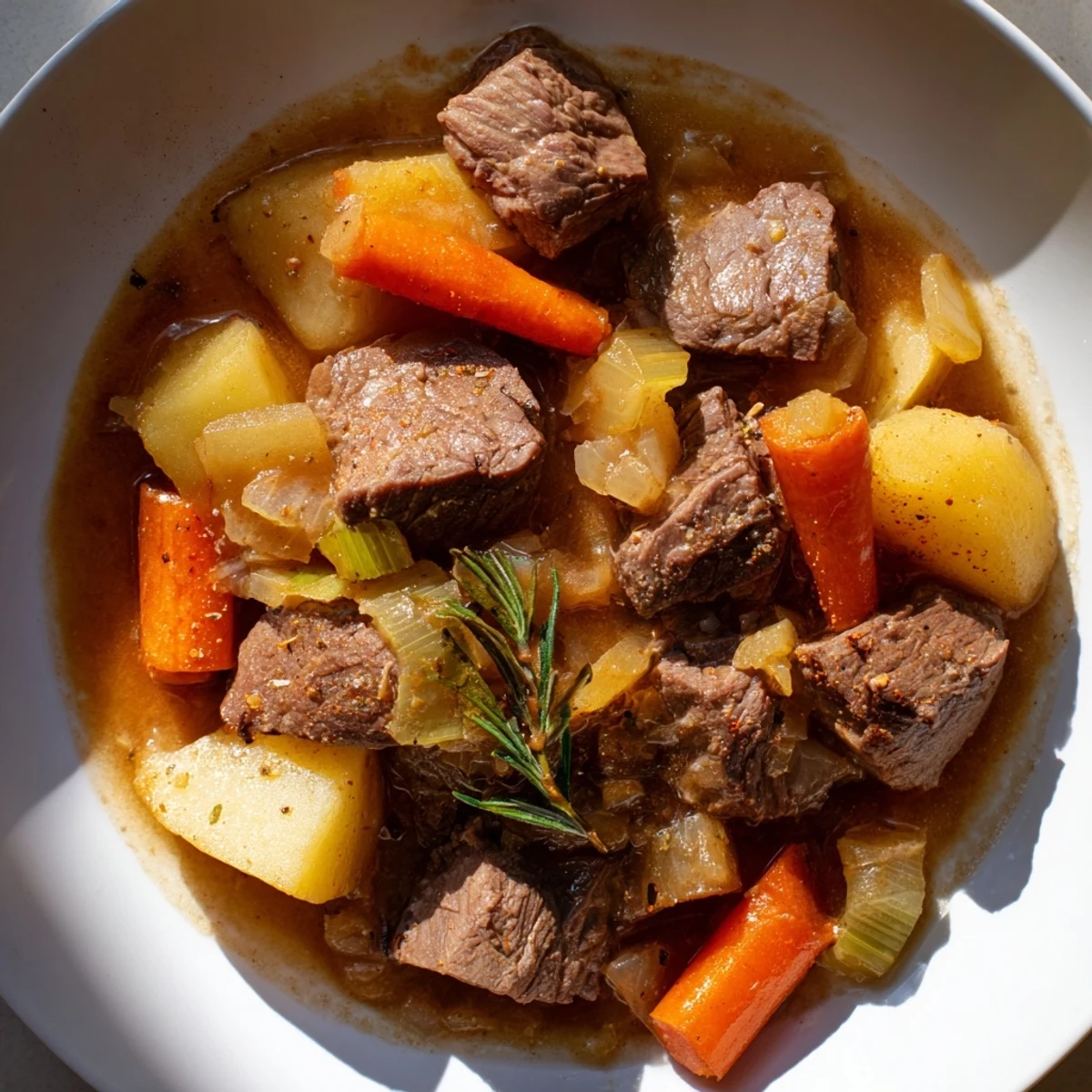
Save This dish features slow-cooked beef chunks paired with potatoes, carrots, and peas, all simmered in a rich broth infused with herbs and seasonings. Browning the beef adds depth, while the lengthy slow cooking tenderizes the meat and melds flavors perfectly. A cornstarch mix thickens the stew, resulting in a satisfying, hearty meal ideal for cold days. The balance of savory spices and fresh vegetables makes it both comforting and nourishing with minimal preparation.
There's something about the smell of beef stew filling your kitchen on a gray afternoon that makes everything feel manageable. I discovered this slow cooker version years ago when I needed dinner to happen without me, and it became my go-to for those days when life demanded my attention everywhere except the stove. The beauty of it is that you barely touch it once everything goes in, and hours later you have this rich, deeply satisfying meal waiting for you. It's the kind of cooking that feels like you're getting away with something.
I made this for my sister the first winter she moved to the city, and she showed up at my apartment half-frozen from the walk. When she stepped inside and hit that wall of warm, savory smell, I watched her shoulders actually relax. We sat by the window with bowls of this stew while snow started falling, and she stopped talking about how much she was missing home. Food doesn't always fix things, but sometimes it gives you permission to just sit for a while.
Ingredients
- Beef chuck (2 lbs): This cut has enough fat and connective tissue to break down into pure tenderness after hours in the slow cooker—it's literally made for this.
- Potatoes and carrots: They soften enough to be creamy but hold their shape if you don't cut them too small, which I learned by making them too small once.
- Onion and celery: These are your flavor foundation, so don't rush chopping them—they're worth the effort.
- Garlic: Three cloves might seem modest, but slow cooking mellows garlic into something almost sweet.
- Frozen peas: Added at the very end so they stay bright and don't turn gray; fresh ones work too if you have them.
- Beef broth (4 cups): Quality matters here since it's the soul of the dish—a good broth tastes savory and clean, not salty.
- Red wine (1/3 cup, optional): It deepens the broth in a way that nothing else quite does, but skip it if you'd rather have extra broth instead.
- Tomato paste and Worcestershire sauce: These add umami depth that rounds out all the flavors into something complex.
- Thyme and rosemary: Dried herbs work beautifully here because they have hours to infuse; fresh ones would disappear.
- Bay leaves: Always remember to fish these out before serving, or at least warn people they're in there.
- Cornstarch: This thickens the broth without adding flour, and it works fast once you need it to.
Instructions
- Sear the beef (optional but honest advice):
- Heat a large skillet over medium-high heat and brown the beef in batches, about 3-4 minutes per side until the outside is deeply golden. You're not cooking it through—just creating flavor on the surface. If you skip this step, the stew will still be good, but it'll taste like it took four hours instead of eight.
- Layer everything in the slow cooker:
- Put the beef in first, then scatter the potatoes, carrots, celery, onion, and garlic on top. Everything doesn't need to be perfectly arranged; the slow cooker will do the work.
- Make the braising liquid:
- In a bowl, whisk together the beef broth, red wine if you're using it, tomato paste, and Worcestershire sauce until the tomato paste is dissolved. This mixture is what turns into your stew's soul, so don't skimp on whisking.
- Season and cook low and slow:
- Pour the liquid over everything, add salt, pepper, thyme, rosemary, and bay leaves, then stir gently. Cover and cook on LOW for 8 hours—this is the part where you can actually leave the house or ignore your kitchen entirely.
- Thicken and finish:
- Mix cornstarch and water in a small bowl until you have a smooth slurry with no lumps. Stir this into the stew, then add the frozen peas and turn the heat to HIGH for 20-30 minutes until the broth thickens and turns glossy.
- Taste and adjust:
- Remove the bay leaves carefully (I learned this by finding one in a spoonful once), then taste and add more salt and pepper if it needs it. Serve in deep bowls with the broth spooned generously over everything.
 Save
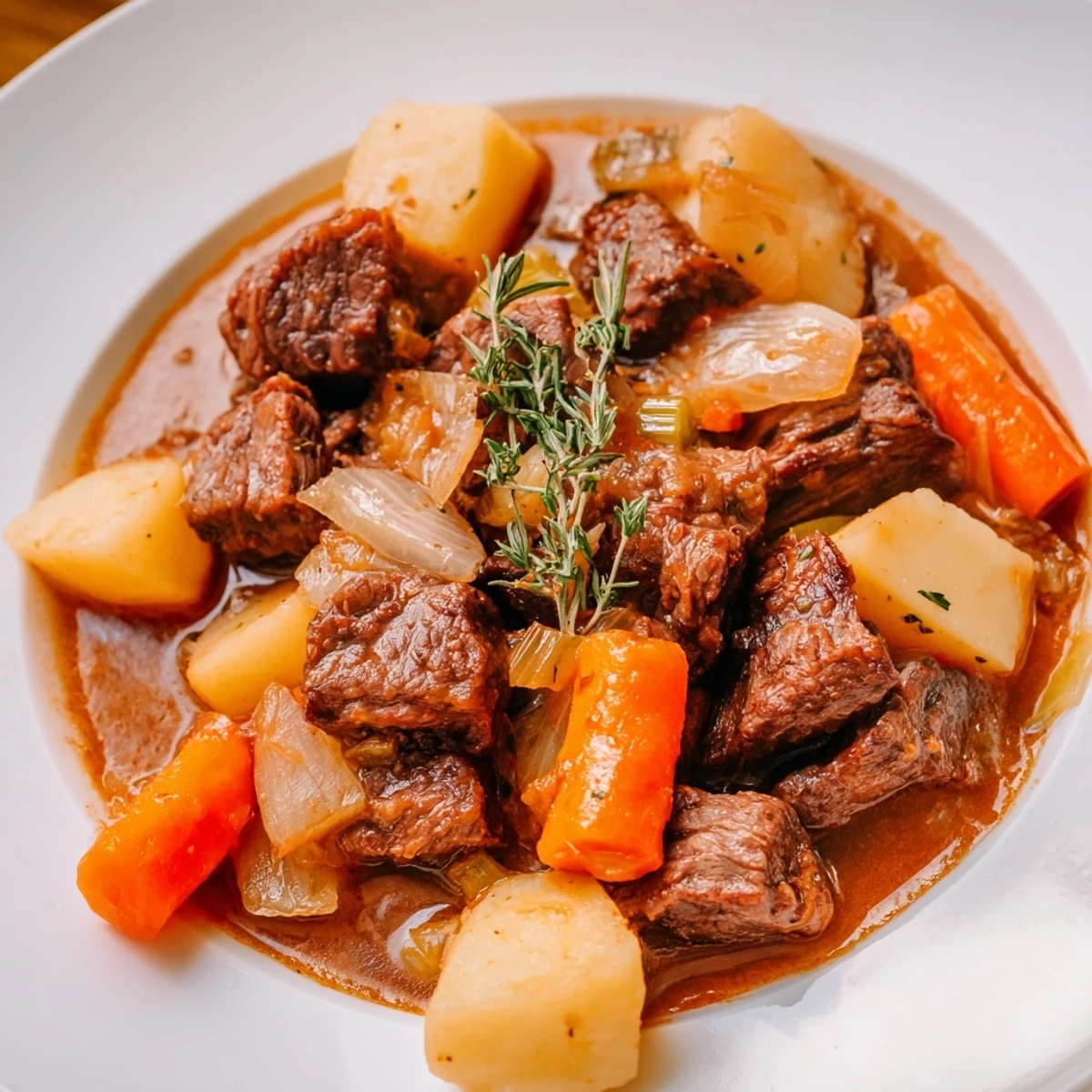
Save My neighbor once asked if I was okay because my apartment smelled so good she thought something was wrong—like maybe I was trying to distract myself from bad news with cooking. I told her it was just stew, but honestly, sometimes that's exactly what you need to do.
The Ritual of Slow Cooking
There's something almost meditative about putting ingredients into a slow cooker and then deliberately not thinking about them. You set it, and then you have to trust it—which is harder than it sounds in a world where we're used to controlling everything. The first time I made this, I kept lifting the lid to check on it, and someone finally told me that every time I peeked, I was adding time to the cooking. Once I stopped looking, the whole thing became easier, and the stew turned out better. It's a good lesson for more than just cooking.
Why This Beats Other Stew Methods
Oven stew is beautiful, but it needs checking and adjusting; stovetop stew demands constant attention; but this slow cooker version asks almost nothing of you except patience. You can leave for work, run errands, or just sit around reading without worrying that something's boiling over or burning on the bottom. The low, even heat means the beef and vegetables cook so gently that nothing falls apart or toughens up—everything becomes exactly the texture you want. That's not laziness; that's actually smart cooking.
Variations and Additions to Consider
Once you understand how this stew works, you can riff on it endlessly. Some people add mushrooms or parsnips, others use different herbs or a splash of fish sauce instead of Worcestershire. The frame stays the same—beef, broth, time, heat—but the details can shift based on what's in your fridge or what you're craving. The only rule is that the beef always needs to braise for those full 8 hours; everything else is flexible.
- Try adding mushrooms in the last hour of cooking so they stay textured instead of turning to mush.
- A splash of balsamic vinegar added in the last 10 minutes brightens the whole thing in a subtle way.
- Turnips or parsnips can replace potatoes entirely if you want something earthier.
 Save
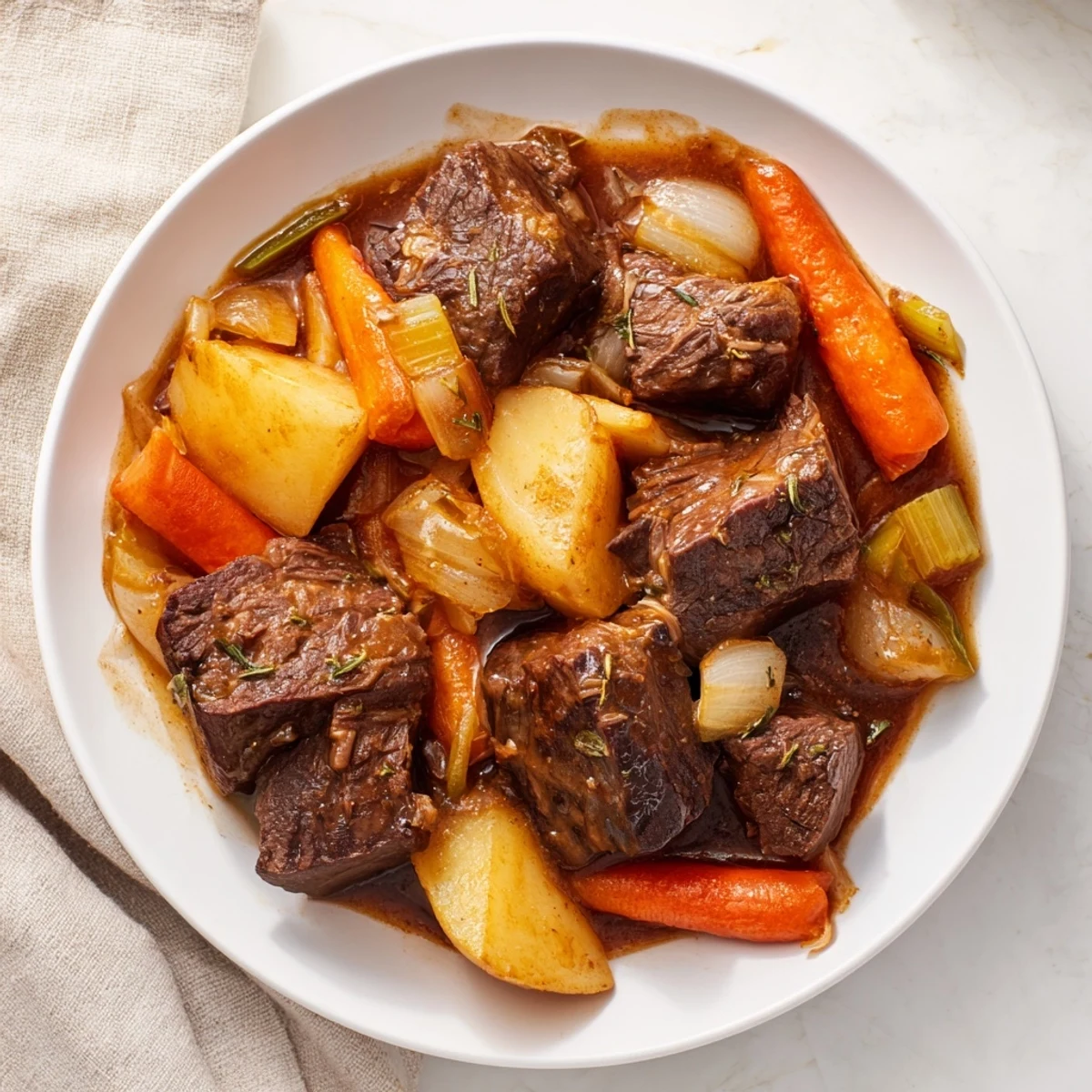
Save This is the kind of recipe that teaches you something about yourself every time you make it. Whether you're cooking for someone special or just for yourself on a quiet evening, it shows up for you the way a good friend does—reliable, warm, and exactly what you needed.
Questions & Answers
- → What cut of beef is best for slow cooking?
-
Beef chuck is ideal due to its marbling and connective tissue, which breaks down during slow cooking to create tender, flavorful meat.
- → Can I skip searing the beef before cooking?
-
Yes, searing is optional but it enhances flavor by creating a rich, caramelized crust on the meat before slow cooking.
- → How do I thicken the stew broth?
-
A mixture of cornstarch and water is added towards the end of cooking to naturally thicken the broth without altering flavor.
- → What are good vegetable options to add?
-
Potatoes, carrots, celery, onions, and peas complement the dish well; root vegetables like parsnips or turnips can also be included for variety.
- → Is it necessary to use red wine in the broth?
-
Red wine adds depth but can be substituted with additional beef broth if preferred or omitted altogether.
- → How long should the stew cook in the slow cooker?
-
Cooking on low for about 8 hours ensures tender beef and well-developed flavors throughout the dish.