
 Save
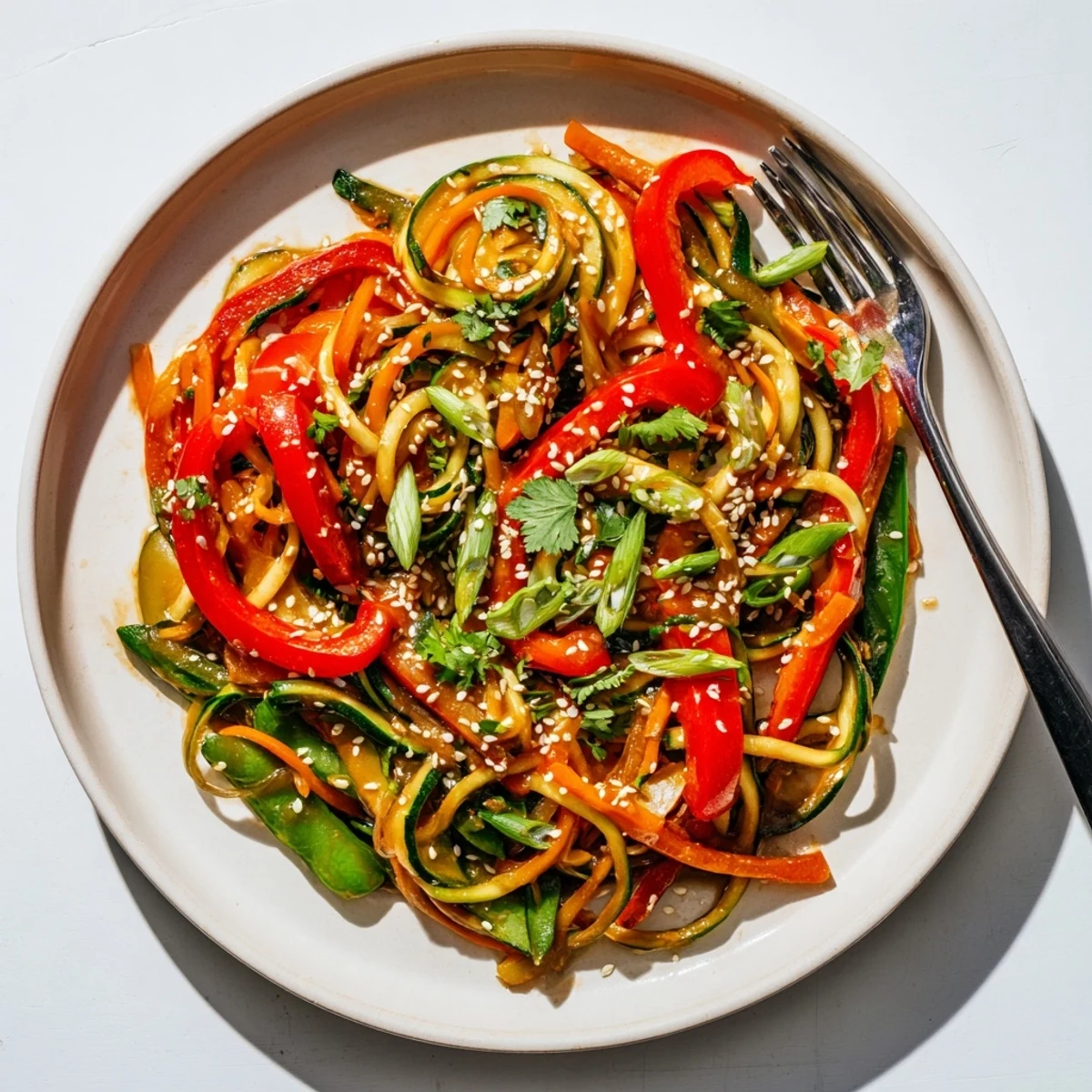
Save This vibrant dish transforms spiralized zucchini into crisp, refreshing noodles coated in a rich homemade teriyaki glaze. The balance of salty tamari, sweet honey, and tangy rice vinegar creates an irresistible sauce that perfectly complements the colorful medley of bell peppers, snap peas, and julienned carrots.
Ready in just 25 minutes, this light yet satisfying bowl works beautifully for quick lunches or effortless dinners. The vegetables maintain their crunch while absorbing the glossy coating, delivering restaurant-quality results with minimal effort.
Last summer my sister came to visit and announced she was going wheat-free for a month. I panicked slightly until I remembered my spiralizer gathering dust in the back of the cupboard. We threw together this teriyaki bowl on a Tuesday night and both looked at each other mid-bite, shocked that something this healthy could taste so indulgent.
My friend Maya stayed over during a particularly stressful week at work, and I made this for dinner. She took three bites, put down her fork, and asked if I would please teach her how to make it. Now she texts me photos every time she spiralizes a zucchini, which is often.
Ingredients
- 3 medium zucchini, spiralized: Look for firm zucchini with smooth skin and avoid any that feel soft or have blemishes
- 1 red bell pepper, thinly sliced: The red pepper adds beautiful color and a subtle sweetness that balances the salty teriyaki
- 1 medium carrot, julienned: Use a julienne peeler or cut by hand into thin matchsticks for even cooking
- 2 green onions, sliced: These add a fresh bite at the end, so add them when you turn off the heat
- 1 cup snap peas, trimmed: Leave them whole for satisfying crunch or cut in half if you prefer smaller bites
- 2 cloves garlic, minced: Fresh garlic matters here, dont be tempted to use the pre-minced stuff in jars
- 1 teaspoon fresh ginger, grated: Peel the ginger with a spoon, then grate it finely for the best flavor distribution
- 3 tablespoons gluten-free soy sauce or tamari: This is your salt source, so taste before adding more
- 1 tablespoon honey or maple syrup: Honey gives a classic teriyaki flavor, maple syrup works beautifully for vegans
- 1 tablespoon rice vinegar: Adds just the right amount of acid to cut through the sweet and salty
- 1 teaspoon sesame oil: Toasted sesame oil adds that nutty, aromatic essence that makes teriyaki sing
- 1 teaspoon cornstarch: This creates that glossy, restaurant-style coating that clings to every noodle
- 2 tablespoons water: Helps dissolve the cornstarch so your sauce thickens without lumps
- 1 tablespoon toasted sesame seeds: Toast them in a dry pan for 30 seconds first, the flavor difference is huge
- 1 tablespoon chopped fresh cilantro: Optional but adds such a lovely fresh finish and pop of green
Instructions
- Whisk together the sauce:
- In a small bowl, combine the soy sauce, honey or maple syrup, rice vinegar, sesame oil, cornstarch, and water. Whisk until the cornstarch is completely dissolved and no lumps remain. Set this aside near your stove.
- Heat your pan:
- Warm a large nonstick skillet or wok over medium-high heat until you can feel the heat rising when you hover your hand above it. Add a small splash of oil if your pan isnt nonstick.
- Bloom the aromatics:
- Add the minced garlic and grated ginger to the hot pan. Stir constantly for about 30 seconds until fragrant but not brown. Watch carefully, garlic can go from perfect to burnt in seconds.
- Cook the harder vegetables:
- Add the sliced bell pepper, julienned carrot, and snap peas to the pan. Stir-fry for 2 to 3 minutes, tossing frequently, until the vegetables are just tender but still retain some crunch.
- Add the zucchini noodles:
- Add the spiralized zucchini to the pan. Use tongs to gently toss and lift the noodles, stir-frying for 2 to 3 minutes. You want them softened but still with some bite, not wilted and watery.
- Add the sauce:
- Pour the teriyaki sauce over the vegetables while stirring constantly. Continue cooking for 1 to 2 minutes as the sauce bubbles and thickens, coating every strand and vegetable.
- Finish and serve:
- Remove the pan from the heat and stir in the sliced green onions. Divide between bowls and sprinkle generously with toasted sesame seeds and fresh cilantro if using.
 Save
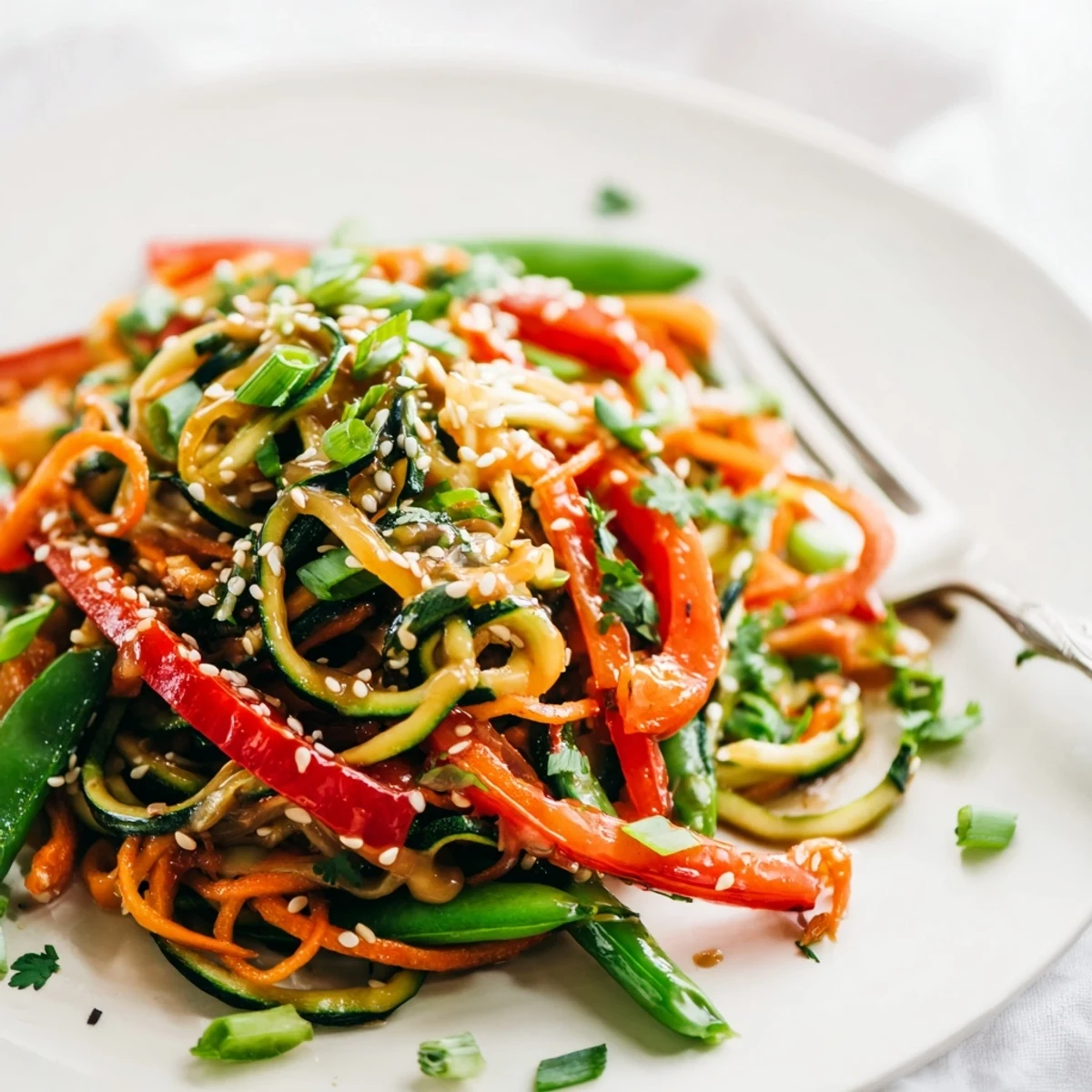
Save This dish became my go-to when I started eating lighter but still craved those bold Asian flavors I love. Something about the combination of crisp vegetables and that glossy teriyaki coating makes you forget youre eating something so good for you.
Making The Perfect Zucchini Noodles
The key to great zucchini noodles is not overcooking them. Spiralize with the thinner noodle blade if your spiralizer has options, and pat them dry with paper towels if they seem especially wet. This helps prevent your final dish from becoming soupy.
Protein Additions That Work
While this version is plant-based, Ive added baked tofu cubes, leftover rotisserie chicken, and even seared shrimp at different times. Add your protein right after the aromatics step and cook through before proceeding with the vegetables.
Customizing Your Bowl
Sometimes I swap snap peas for snow peas or add shredded cabbage for extra crunch. The sauce works beautifully with almost any vegetable combination you have on hand.
- Try adding sliced shiitake mushrooms for an earthy, umami-rich dimension
- A drizzle of sriracha or chili oil makes this perfect for spice lovers
- Make a double batch of the sauce to keep in the fridge for quick weekday meals
 Save
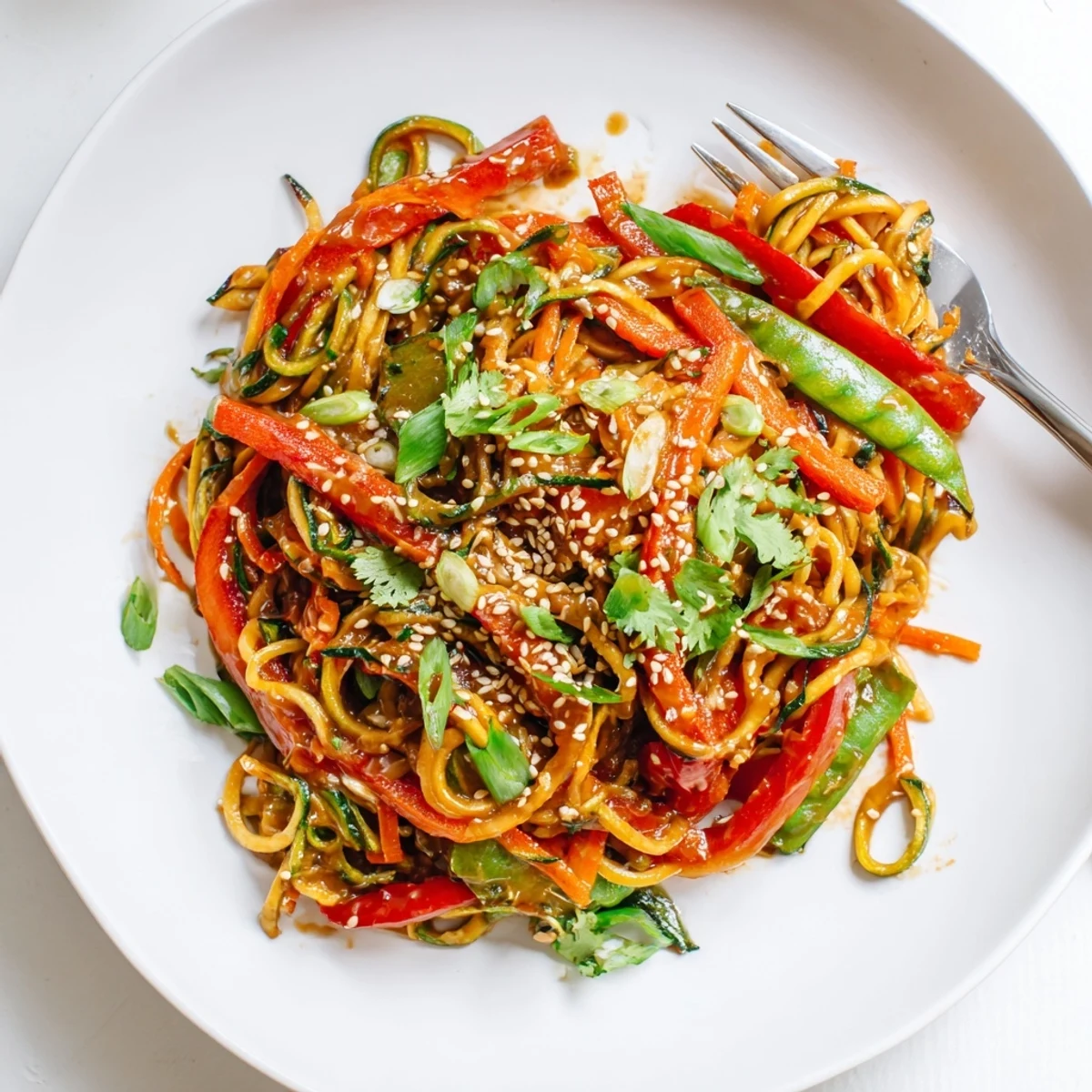
Save This recipe proved to me that healthy eating never has to mean sacrificing flavor. Hope it finds its way into your regular rotation too.
Questions & Answers
- → How do I prevent zucchini noodles from becoming watery?
-
Avoid overcooking the zucchini noodles. They only need 2-3 minutes in the hot skillet to soften slightly while retaining their crisp texture. Immediately tossing them with the thickened teriyaki sauce helps the coating adhere rather than pool at the bottom.
- → Can I make the teriyaki sauce ahead of time?
-
Absolutely. Whisk together all sauce ingredients and store in an airtight container in the refrigerator for up to a week. The cornstarch may settle, so give it a quick stir or re-whisk before using. This makes meal prep even faster on busy days.
- → What vegetables work well in this dish?
-
Beyond the suggested mix, try shiitake mushrooms, broccoli florets, baby corn, or bok choy. For extra crunch, add water chestnuts or sliced bamboo shoots. The key is choosing vegetables that cook quickly and maintain some texture when stir-fried.
- → How can I add protein to make this more filling?
-
Baked tofu, edamame, or shredded cooked chicken absorb the teriyaki beautifully. For plant-based options, tempeh or seared chickpeas work well. Simply add your protein during step 4 so it heats through and gets coated in the sauce along with the vegetables.
- → Is this dish freezer-friendly?
-
The zucchini noodles release moisture when frozen and thawed, affecting texture. Instead, freeze just the teriyaki sauce in ice cube trays for future use. The vegetables and noodles are best enjoyed fresh, though leftovers keep well in the refrigerator for 2-3 days.