
 Save
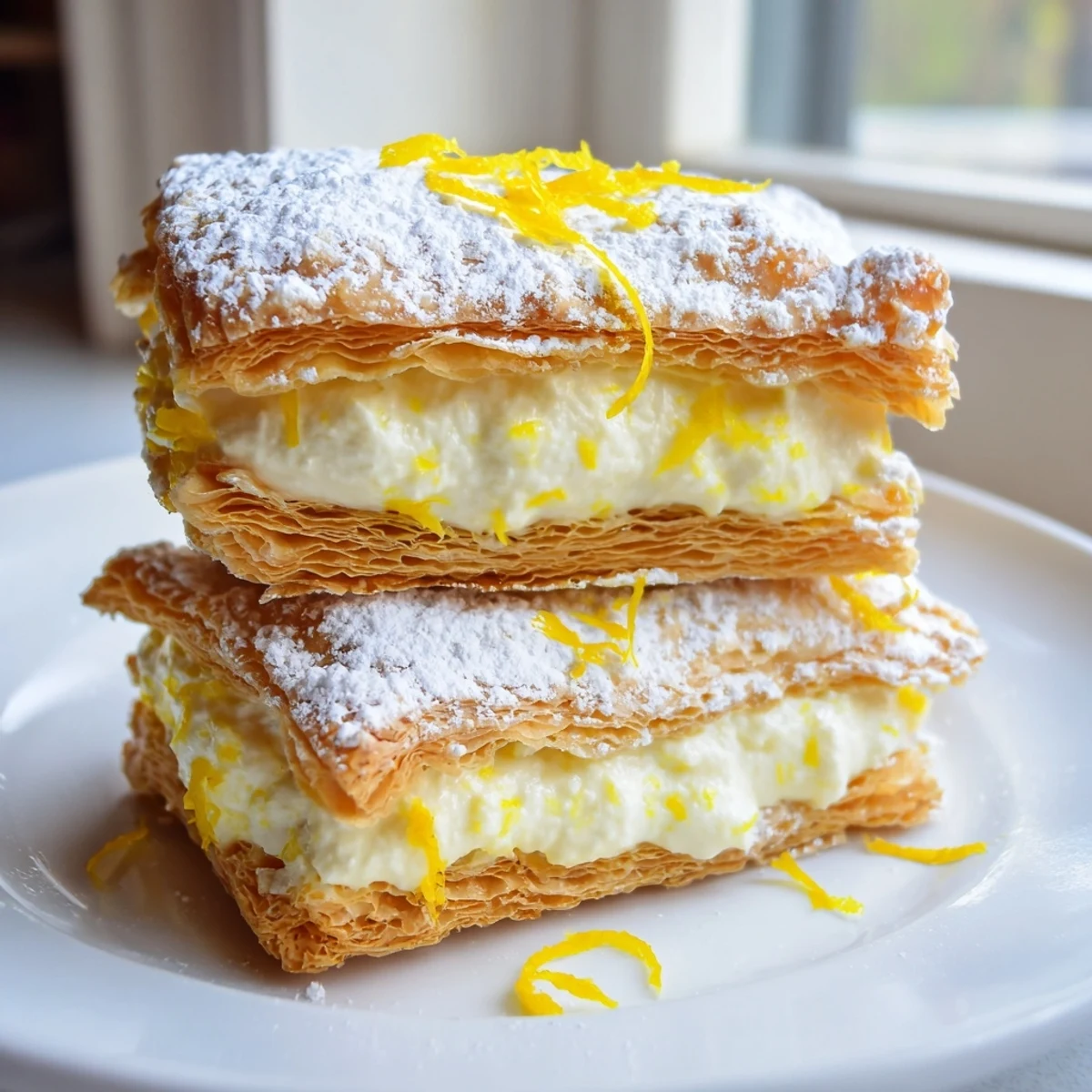
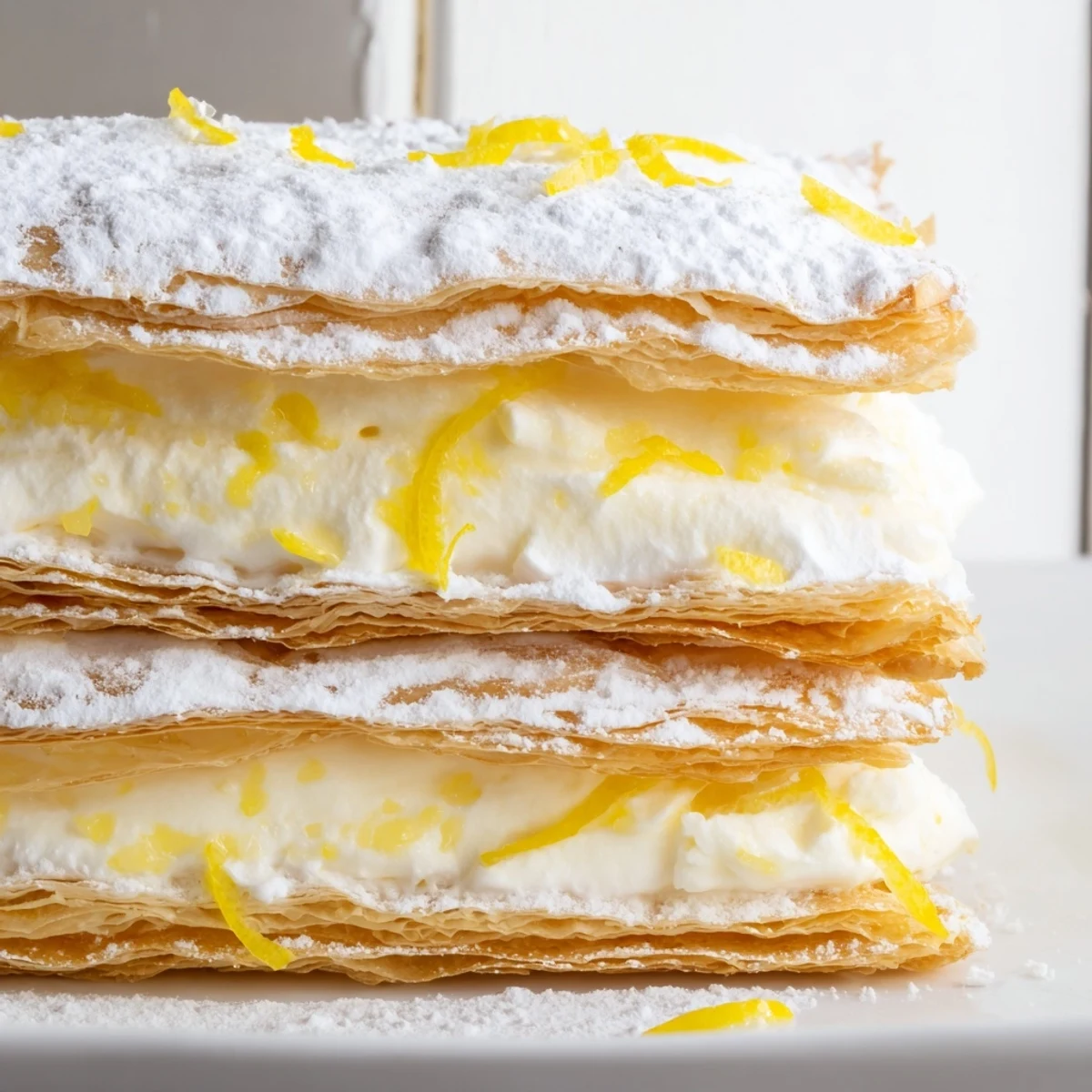
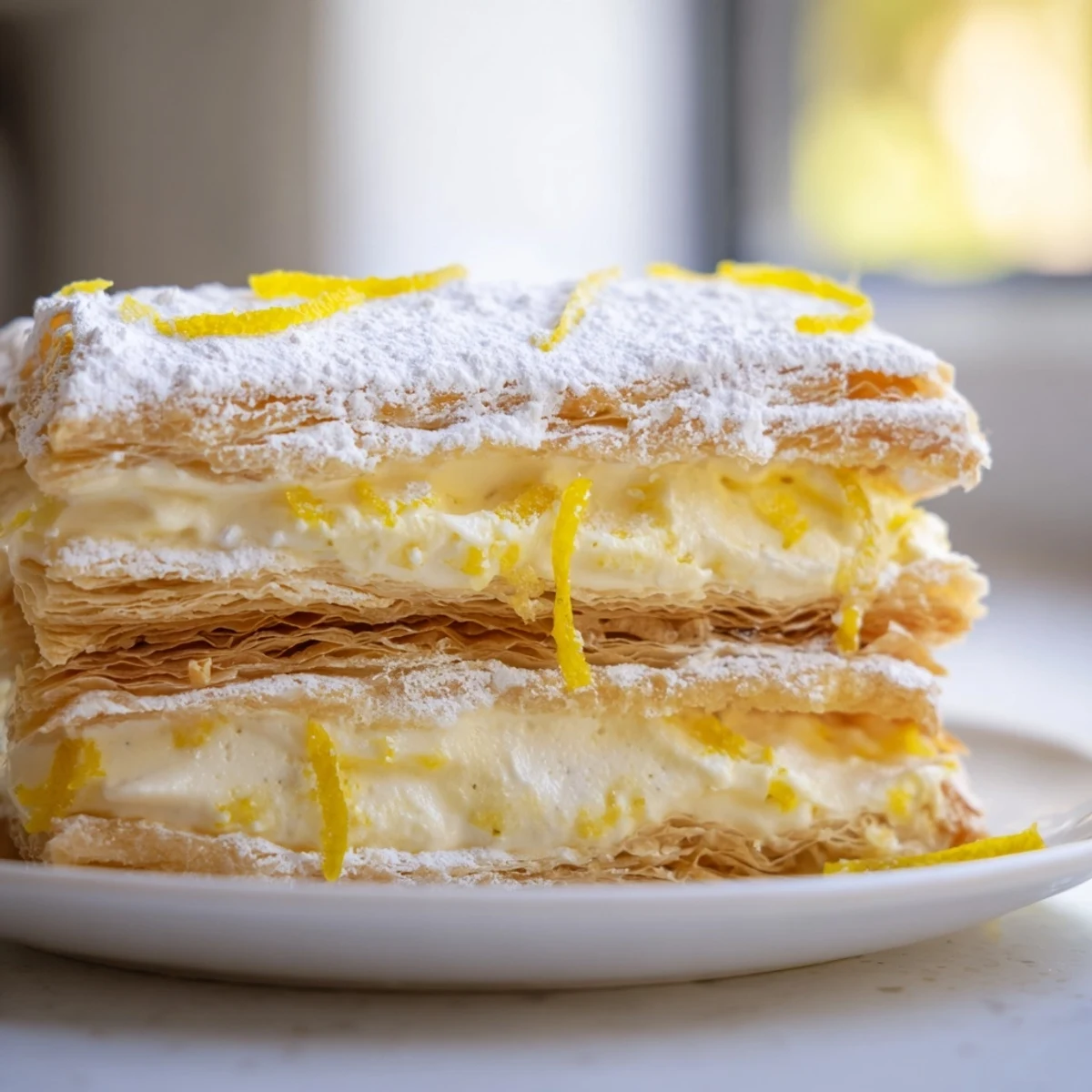
Save This elegant mille feuille pairs homemade or store-bought puff pastry with a silky lemon ricotta cream filling. The pastry rectangles are baked until deeply golden and shatteringly crisp, then sandwiched around a light mixture of whipped ricotta, heavy cream, lemon zest, and vanilla.
Each serving delivers a satisfying contrast of textures—the crunch of caramelized pastry against the cool, tangy cream. A final dusting of powdered sugar and a scatter of fresh lemon zest complete the presentation.
Ready in under an hour, this dessert strikes the balance between refined and approachable, making it suitable for both casual gatherings and more formal occasions.
The afternoon light was doing that golden thing through my kitchen window when I got the idea to stack something impossibly flaky with something impossibly creamy. I had leftover ricotta from lasagna night and a sheet of puff pastry that had been sitting in my freezer like a promise. Twenty minutes later my apartment smelled like a Parisian bakery and I was questioning every dessert I had ever made that was more complicated than this.
I brought these to a rooftop dinner party last June and watched three self professed non dessert people reach for seconds without making eye contact. One friend actually asked which bakery I had visited before admitting they were homemade.
Ingredients
- Puff pastry (1 sheet, approx 250 g): Store bought is perfectly fine here and honestly what most professionals use at home.
- Granulated sugar (1 tbsp): Just enough to give the pastry a delicate caramelized crust without overpowering it.
- Ricotta cheese (250 g): Drain it in a fine mesh sieve for twenty minutes first because excess moisture will make your cream runny.
- Heavy cream (100 ml): This is what transforms the ricotta from dense to cloudlike when folded in properly.
- One lemon (zest and juice): Use a Microplane for the zest and roll the lemon firmly on your counter before juicing to get every last drop.
- Powdered sugar (60 g plus extra for dusting): Sift it into the ricotta to avoid any unwelcome lumps in your silky filling.
- Vanilla extract (1 tsp): A quiet background note that rounds out the brightness of the lemon beautifully.
Instructions
- Preheat and prepare:
- Set your oven to 200 degrees Celsius (400 degrees Fahrenheit) and line a baking tray with parchment paper. This is also a good moment to take a deep breath because everything from here is genuinely easy.
- Cut and sugar the pastry:
- Roll the puff pastry out on a lightly floured surface and cut it into twelve equal rectangles. Lay them on the tray, sprinkle with granulated sugar, then place another sheet of parchment and a second baking tray on top to keep them from puffing unevenly.
- Bake until golden:
- Bake for 15 to 20 minutes until the pastry is crisp and deeply golden. Let every piece cool completely on a wire rack because warm pastry will melt your beautiful cream.
- Make the lemon ricotta cream:
- Whisk the ricotta in a bowl until perfectly smooth, then add powdered sugar, lemon zest, lemon juice, and vanilla. In a separate bowl, whip the heavy cream to stiff peaks and gently fold it into the ricotta mixture with a spatula, keeping as much air in as possible. Refrigerate until you are ready to assemble.
- Build the mille feuille:
- Spread or pipe a generous layer of lemon ricotta cream onto six of the pastry rectangles. Top each one with a second rectangle and press down just gently enough to settle them together.
- Finish and serve:
- Dust the top layer generously with powdered sugar and scatter over some extra lemon zest if you are feeling decorative. Serve immediately because the contrast of crisp pastry and cool cream is the whole magic.
 Save
Save Somewhere between the third and fourth mille feuille I assembled that evening I realized I had stopped worrying about whether they looked perfect and started just enjoying the process.
When Puff Pastry Goes Wrong
If your pastry shrinks dramatically in the oven it was not cold enough when it went in. Pop it back in the fridge for ten minutes before baking and it will hold its shape beautifully.
A Word on Ricotta Quality
Fresh ricotta from an Italian deli will taste noticeably sweeter and creamier than the standard supermarket tub. If you can only find the tub kind, the draining step becomes even more important.
Serving and Pairing Ideas
A cold glass of Moscato dAsti alongside one of these is a combination worth planning an entire evening around. Fresh raspberries or blueberries scattered on the plate add color and a burst of tartness that plays wonderfully with the lemon.
- Dememara sugar on the pastry before baking gives a deeper caramel crunch than regular white sugar.
- A piping bag with a star tip turns the cream layer into something that makes guests gasp when they bite through.
- These are best eaten within two hours of assembly so plan your timing around when people arrive.
 Save
Save Some desserts are about precision and performance but this one is really about stacking simple beautiful things together and letting them shine. That is the kind of cooking I want to do more of.
Questions & Answers
- → Can I make the puff pastry from scratch?
-
Absolutely. Homemade puff pastry will give you the flakiest, most buttery layers. However, store-bought puff pastry works beautifully and cuts down significantly on preparation time. If using store-bought, choose an all-butter variety for the best flavor.
- → How do I keep the puff pastry crisp after assembling?
-
Assemble the mille feuilles as close to serving time as possible. The lemon ricotta cream will gradually soften the pastry layers. If you need to prepare ahead, keep the baked pastry rectangles and the cream stored separately in the refrigerator, then assemble just before serving.
- → Can I substitute the ricotta with another cheese?
-
Mascarpone is the closest substitute and will produce a richer, slightly denser cream. Cream cheese can also work but should be softened and beaten well to avoid lumps. Keep in mind that substitutions will alter the overall flavor and texture profile.
- → Why do I need a second baking tray on top of the pastry?
-
Placing a second tray on top of the pastry while baking prevents it from puffing unevenly. This technique, known as blind-weighting, ensures the rectangles stay flat and uniform, making them much easier to stack and assemble into neat layers.
- → How should I store leftovers?
-
Assembled mille feuilles are best enjoyed immediately. If you have leftover components, store the baked pastry rectangles in an airtight container at room temperature for up to two days, and refrigerate the lemon ricotta cream in a covered bowl for up to three days.
- → Can I freeze the assembled mille feuilles?
-
Freezing is not recommended once assembled, as the cream filling will separate and the pastry will lose its crispness upon thawing. You can, however, freeze the baked, unbaked pastry rectangles for up to one month and bake them directly from frozen when needed.