
 Save
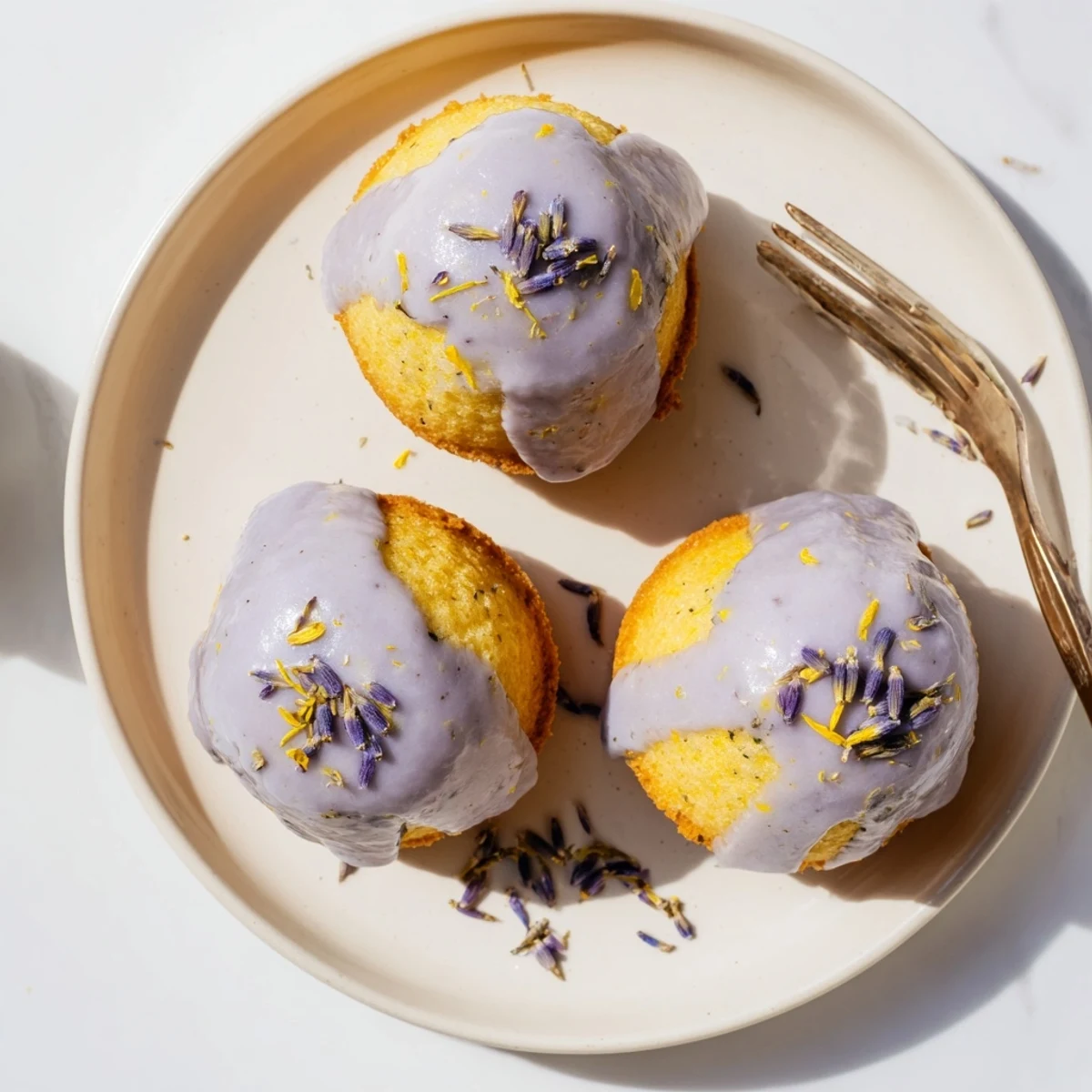
Save These elegant individual treats combine bright citrus notes with aromatic lavender for a sophisticated dessert experience. The moist, tender crumb comes from carefully creamed butter and sugar, while fresh lemon zest and juice provide vibrant flavor throughout each bite.
The fragrant glaze begins with steeping culinary lavender in warm milk, creating an infused base that's whisked with powdered sugar and lemon juice for a smooth, pourable finishing touch.
Perfect for afternoon tea, brunch gatherings, or as an impressive finale to dinner parties. The individual portions make serving effortless, while the beautiful presentation wows guests every time.
The scent of lavender always pulls me back to this tiny bakery I stumbled upon in Provence, where an elderly woman taught me that flowers belong in cakes just as much as they do in gardens. Those mini lemon cakes she served became my obsession, and I spent months trying to recreate that perfect balance of bright citrus and subtle floral sweetness. Now they're my go-to when I want to make something that feels elegant without requiring hours of fuss. There's something magical about watching guests take that first bite and seeing their eyes light up at the unexpected lavender finish.
I made these for my mother's birthday brunch last spring, and she actually stopped mid conversation to ask what I'd put in them. Watching her take a second cake before anyone else had even finished their first told me everything I needed to know. Now she requests them for every gathering, claiming they've ruined her for all other lemon desserts.
Ingredients
- 1 1/2 cups all-purpose flour: The structure that holds everything together, dont pack it down when measuring
- 1/2 teaspoon baking powder: Gives these little cakes their gentle rise without making them too airy
- 1/4 teaspoon baking soda: Balances the acidity from all that lovely lemon juice
- 1/4 teaspoon salt: Just enough to make all the flavors pop without tasting salty
- 1/2 cup unsalted butter softened: Room temperature butter is non negotiable for that tender texture
- 1 cup granulated sugar: Creates the perfect crumb while letting lemon shine through
- 2 large eggs room temperature: Cold eggs can seize the butter, so let them sit out first
- 2 tablespoons lemon zest: Freshly grated makes all the difference, avoid the white pith
- 1/4 cup fresh lemon juice: About two lemons worth, strain out any pulp or seeds
- 1/2 teaspoon pure vanilla extract: Rounds out the sharp citrus notes beautifully
- 1/2 cup whole milk room temperature: Creates the most tender crumb possible
- 1/4 cup whole milk for glaze: The carrier for all that lovely lavender flavor
- 1 teaspoon culinary lavender buds: Only use culinary grade, the stuff from gardens can taste bitter
- 1 cup powdered sugar sifted: Sifting prevents lumps in your beautiful glaze
- 1/2 teaspoon lemon juice: Just enough acidity to cut through the sweetness
- Extra lemon zest and edible lavender: The finishing touches that make these look bakery worthy
Instructions
- Preheat your oven and prepare the pan:
- Set your oven to 350°F and generously grease each cup of your mini bundt pan, getting into all those little crevices where cakes love to stick.
- Whisk the dry ingredients:
- Combine flour, baking powder, baking soda, and salt in a medium bowl, giving it a quick whisk to aerate everything evenly.
- Cream the butter and sugar:
- Beat the softened butter and sugar together for 2 to 3 minutes until it's pale and fluffy, scraping down the sides to catch any pockets.
- Add the eggs and flavorings:
- Drop in the eggs one at a time, letting each fully incorporate before adding the next, then stir in the lemon zest, juice, and vanilla until fragrant.
- Combine wet and dry ingredients:
- Add the flour mixture in three parts, alternating with milk and beginning and ending with flour, mixing only until you no longer see dry streaks.
- Fill the pans and bake:
- Divide the batter among your prepared cups, filling each about two thirds full, then bake for 17 to 20 minutes until a toothpick comes out clean.
- Cool the cakes:
- Let them rest in the pan for 10 minutes before gently turning them out onto a wire rack to cool completely, patience pays off here.
- Make the lavender infusion:
- Heat the glaze milk just until it simmers, remove from heat, and stir in lavender buds letting them steep for 10 minutes before straining.
- Prepare the glaze:
- Whisk the infused milk with powdered sugar and lemon juice until completely smooth, adjusting with tiny drops of milk if needed for pourable consistency.
- Glaze and garnish:
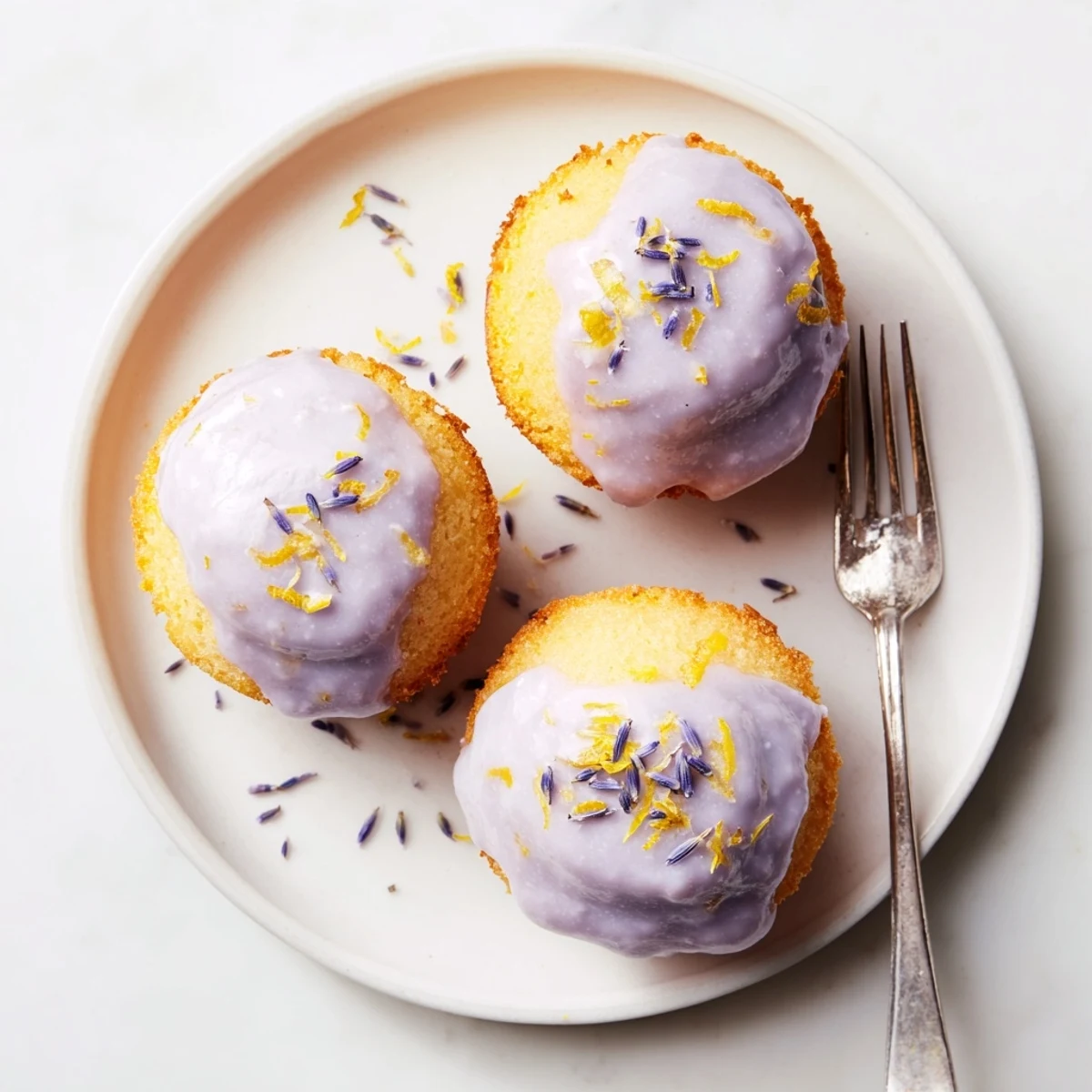
- Drizzle the glaze over each cooled cake letting it drip down the sides naturally, then finish with a pinch of lemon zest or lavender buds while wet.
 Save
Save My neighbor now refuses to let me visit unless I bring a batch, claiming her tea time has been forever spoiled. It became our little Sunday ritual, trading these cakes for her perfect Earl Grey blend, and I wouldn't have it any other way.
Getting That Bakery Style Finish
The glaze consistency makes or breaks these cakes, and I learned through trial and error that it should be thick enough to hold its shape but thin enough to flow in beautiful ribbons. If it's too thick, add milk literally one drop at a time, and if it's too thin, whisk in more powdered sugar a tablespoon at a time.
Making These Your Own
Sometimes I swap lavender for rosemary when I want something more herbal and less floral, and the combination with lemon is unexpectedly sophisticated. You could also try lime instead of lemon for a completely different vibe, or even orange with a tiny pinch of cardamom in the glaze.
Serving and Storage
These are best enjoyed the same day they're made when the crumb is most tender and the glaze is still slightly soft. However, they'll keep in an airtight container for up to two days, though the lavender flavor will intensify overnight.
- Bring to room temperature before serving for the best texture
- A spritz of lemon juice right before serving wakes up the flavors
- Pair with something neutral like plain tea to let the cakes really shine
 Save
Save There's something deeply satisfying about serving something that looks like it came from a fancy patisserie but came from your own kitchen. These little cakes have a way of making ordinary moments feel special.
Questions & Answers
- → Can I make these ahead of time?
-
Yes, bake the cakes up to 2 days in advance and store in an airtight container. Add the glaze shortly before serving for the freshest appearance and texture.
- → Where can I find culinary lavender?
-
Look for culinary-grade lavender in specialty spice shops, well-stocked grocery stores, or online retailers. Ensure it's specifically labeled for culinary use, as ornamental lavender may contain pesticides.
- → Can I use dried lavender buds instead of fresh?
-
Absolutely. Dried culinary lavender works perfectly for steeping in the glaze. Use about 3/4 teaspoon if the buds are particularly potent, and adjust to taste.
- → What's the best way to glaze these cakes?
-
Place cooled cakes on a wire rack over parchment paper. Hold each cake over the bowl and spoon glaze over the top, letting it drip down the sides. Work quickly before the glaze sets.
- → Can I freeze these mini lemon cakes?
-
Freeze unglazed cakes for up to 3 months. Wrap individually in plastic wrap, then place in a freezer-safe container. Thaw overnight at room temperature before glazing.
- → What can I substitute for lavender?
-
Dried rose petals make a lovely floral alternative, or skip the lavender entirely for a classic lemon glaze. Fresh herbs like thyme or rosemary also complement lemon beautifully.